

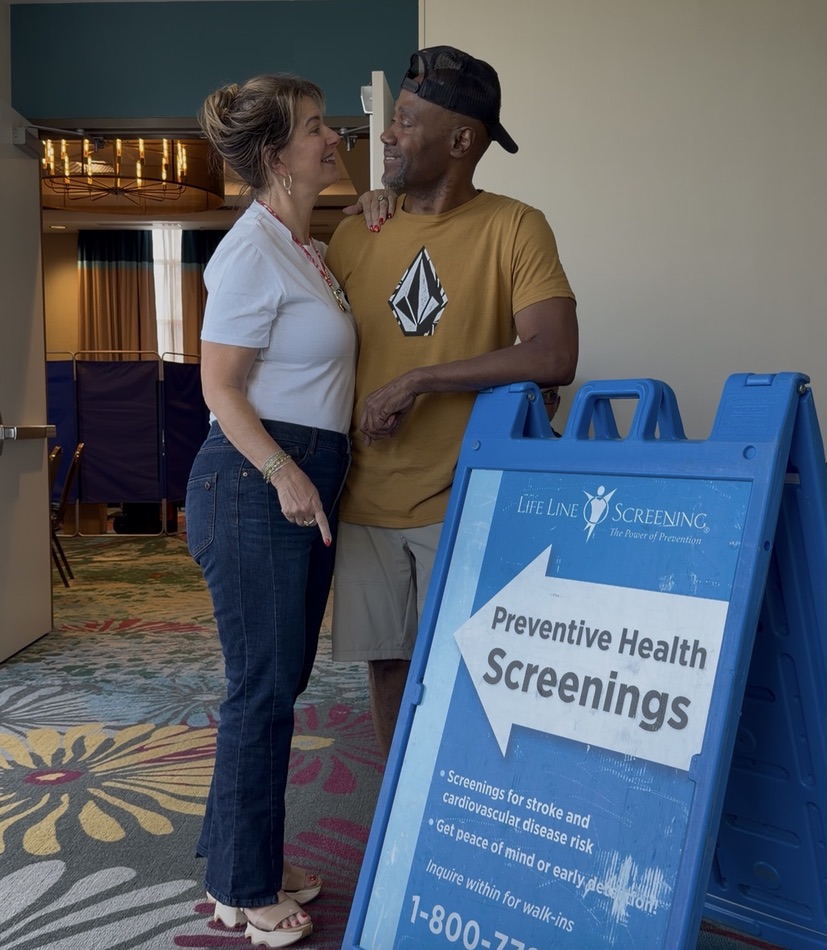

If you’re here for the discount code, it’s grownup15, good for $15 off when you sign up at www.lifelinescreening.com. If you want to know whether the screening itself is worth it, keep reading.
I play pickleball. I travel. I feel good most days. My husband Paul says the same thing about himself. We’re both 62, and by every measure we’d use to judge our own health, we’re doing fine.
But feeling fine isn’t a medical test. It’s a feeling. And feelings don’t tell you what’s happening inside your arteries.
That’s why we booked a Life Line Screening. If you haven’t heard of it, Life Line Screening is a preventive health company that’s been running community based screenings since 1993. They’ve screened over 11 million people across the country, at more than 15,000 locations in every state except Alaska and Hawaii. The core package screens for stroke risk and heart disease risk, and it’s the kind of testing your doctor typically won’t order unless you already have symptoms.
Which is exactly the problem. According to Life Line Screening, 80% of stroke victims had no symptoms beforehand. The stroke was the first sign. No warning, no buildup, just the event itself. That statistic is the whole reason this article exists. I didn’t want to find out I was in that 80% after the fact.
What the Screening Package Covers
The core package includes four screenings, all for under $200:
Carotid Artery Screening. This is the big one for stroke risk. A technologist uses an ultrasound wand with gel on your neck to look at the arteries that feed blood to your brain. No needles, nothing invasive, just a wand moving across your neck for a few minutes.
Abdominal Aortic Aneurysm Screening. Same ultrasound technology, this time checking the main artery running through your abdomen for any abnormal bulging or weakness.
Peripheral Arterial Disease Screening. Blood pressure cuffs go on both your arms and your ankles to compare circulation and check for blockages in the arteries of your limbs.
Atrial Fibrillation Screening. Six stickers go on your chest and limbs for a quick EKG reading, checking whether your heart is beating in a normal rhythm.
I ended up getting five screenings total, Paul got four. The whole appointment took somewhere between 60 and 90 minutes, and honestly, most of that time was just moving between stations and waiting, not the actual testing.
The Part I Actually Appreciated
Here’s what stood out to me. If the technologist sees something concerning during any of the screenings, they tell you that day. You’re not sitting around for ten days wondering if something urgent showed up. The full detailed results come later through an online portal, but anything that needs immediate attention doesn’t wait for the report.
That distinction matters more than it sounds like on paper. A lot of preventive testing leaves you in limbo, waiting on a portal login or a call back. This didn’t. If there was something worth acting on right away, we would have known right away.
Was It Uncomfortable?
No. That’s really the honest answer. Quick, painless, non-invasive, that’s how Life Line Screening describes it, and that description held up. No needles for the imaging portions. No radiation. Nothing that required recovery time or made either of us think twice about going back to our day afterward.
Results
Both my husband and I got our results via email a week after our tests. The report was highly readable and easy to understand. And we were relieved to learn that we were both in the normal range on everything.
Why I’m Writing This Instead of Just Telling My Friends
Because I have a lot of friends my age, and most of them are in the same position Paul and I were in. They feel fine. They’re active. They assume that if something were wrong, they’d know. But stroke risk and heart disease risk don’t always announce themselves before they show up in a serious way, and by the time symptoms appear, the moment for prevention has usually already passed.
Life Line Screening recommends their screenings for anyone 40 and older, not just people our age. If you’re in your 40s or 50s and you’ve been putting off this kind of preventive testing because nothing feels wrong, that’s actually the exact reasoning the screening exists to challenge.
The Discount Code, One More Time
Code grownup15, $15 off, linked below. That’s it, that’s the whole pitch.
Bottom Line
We didn’t wait for symptoms. We wanted the numbers. Results take about 10 days to land in the portal, and when ours came in it gave us both tremendous piece of mind.
Feeling fine is a nice feeling. It’s just not information. Sixty to ninety minutes and under $200 is a reasonable trade for actually finding out.