Hey there, I'm Jill, the founder of GrownupDish.com and your go-to gal for everything midlife. As a recovering CEO, food lover, world traveler, and self-proclaimed pop culture aficionado, I've got a wealth of experience and wisdom to share with you.
Recipe Index
Category 2
Category 3
Sign up!
get exclusive access to delicious recipes, honest product reviews, wellness tips, and all the juicy grownup dish you won't find anywhere else.
Sign up here!
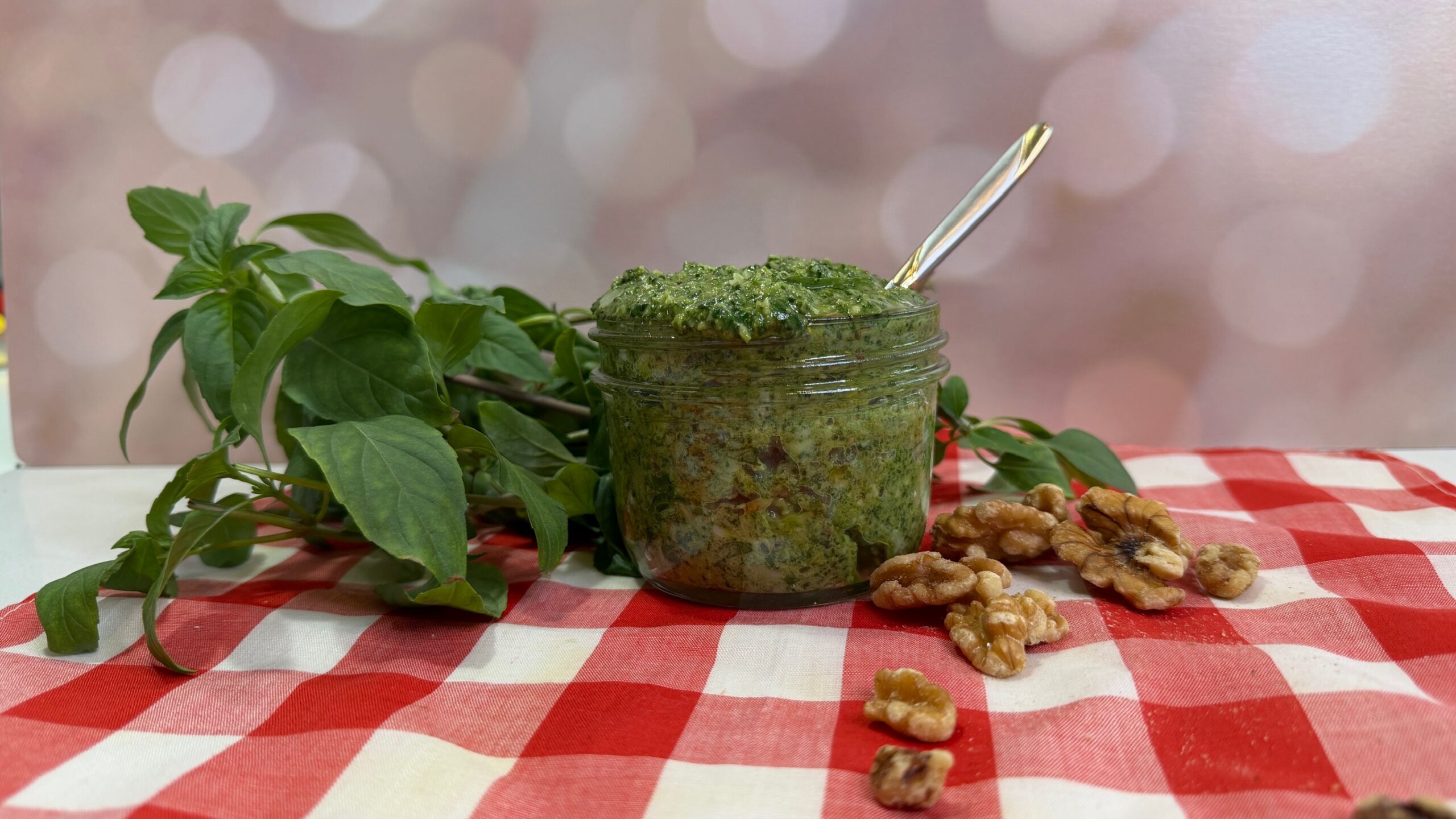
If you’ve already made my Easy Basil Pesto, you know the drill: throw some stuff in a food processor and end up with something that makes everything it touches taste better. This version follows the same simple method, but the ingredient swap changes the whole personality of the sauce. Meet Thai Basil Pesto with a Twist, a 50/50 blend of Thai basil and Genovese basil with a mix of walnuts and pine nuts that makes this pesto bolder, earthier, and honestly more interesting than the classic.
Thai basil is not just regular basil with a different passport. Genovese basil offers a sweet, slightly peppery taste that’s ideal for classic Italian dishes and cold preparations like pesto. Thai basil, by contrast, delivers bold anise and mint undertones with a touch of spice. Visually, Thai basil has narrower, more elongated leaves with subtle serration along the edges and a distinct purple hue on its stems. You’ll recognize it at the grocery store or farmers market once you know what you’re looking for.
The other big difference is how each one behaves under heat. Genovese basil can lose its fragrance when overheated, so it’s best added at the end of cooking. Thai basil retains its aroma and taste even after simmering in curries or being tossed into hot broths. In a raw preparation like pesto, Thai basil brings that punchy licorice note front and center, which is exactly why blending it with Genovese keeps things balanced rather than overwhelming.
How I Grow Basil at Home
I grow both types of basil in my Lettuce Grow Farmsand hydroponic garden. Check out my full review and discount code HERE.
Why the 50/50 Blend Works
Using Thai basil on its own in pesto would be a lot. The anise flavor is assertive, and without the brightness of Genovese to balance it, you’d end up with something that tastes more like a curry component than a pasta sauce. The half-and-half ratio gives you the familiar green herbaceousness of classic pesto with an underlying warmth and complexity that makes people ask what’s different about it. They won’t be able to put their finger on it, which is exactly the point.
The Nut Mix: Why Walnuts and Pine Nuts
Traditional pesto uses pine nuts, which are delicious and also, let’s be honest, very expensive. Walnuts bring an earthy depth that actually complements the savory quality of Thai basil really well, and using a 50/50 mix of the two means you get the buttery richness of pine nuts without breaking the bank on a full cup of them. It’s a practical upgrade that also tastes better. If you can’t find walnuts you can also substitute pistachio nutmeats.
How To Use This Pesto
All the classic pesto applications work here, stirred into pasta, spooned over grilled chicken or salmon, folded into roasted vegetables. But the Thai basil notes open up some new territory. Try it as a sauce for cold noodles, swirled into a coconut-based soup, or used to top a grain bowl. And it is amazing in this Crunchy Thai Basil Chicken Salad recipe.
Make a Big Batch and Freeze It
Same rule as always: make more than you think you need and freeze the rest in ice cube trays. Pop a cube into anything that needs a flavor boost. This pesto keeps in the fridge for up to 10 days in an airtight container, and the freezer extends that indefinitely.
Thai Basil Pesto with a Twist: same easy food processor method as classic basil pesto, bolder flavor. A 50/50 blend of Thai and Genovese basil plus walnuts and pine nuts gives this sauce an earthy depth that works on pasta, grilled chicken, cold noodles, and grain bowls.
Ingredients
Scale
1 cups fresh Thai basil leaves (removed from stems)
1 cups fresh Genovese basil leaves (removed from stems)
1/2 cup pine nuts
1/2 cup walnuts or shelled pistachio nuts
2 garlic cloves, pressed
2 tablespoons fresh lemon juice
1/2 – 3/4 cup good olive oil
1/2 cup Parmesan cheese, freshly grated (optional)
1 pinch salt and pepper to taste
Instructions
Add all the basil, garlic, lemon juice and parmesan to a food processor and pulse until the mixture resembles a coarse paste.
With the food processor motor running, stream in olive oil. Start with 1/2 cup and add more until you reach your desired smooth consistency.
Add 1 pinch salt and pepper to taste to taste. If you added Parmesan, go easy on the salt before tasting.
Notes
Omit Parmesan for a Paleo or Whole30 version.
Thai basil has a stronger anise flavor than Genovese, so stick to the 50/50 ratio the first time you make it. Going heavier on the Thai basil will make the pesto noticeably more licorice-forward.
Freeze leftovers in ice cube trays for easy use year-round.
This pesto works beautifully as a base for Thai Basil Chicken Salad.